
Best iPhones Under $400 in 2026: Where I Would Spend
Find the best fit below $400: compare the iPhone 14, iPhone 13 and a discounted 13 Pro, with clear used-price and condition checks.
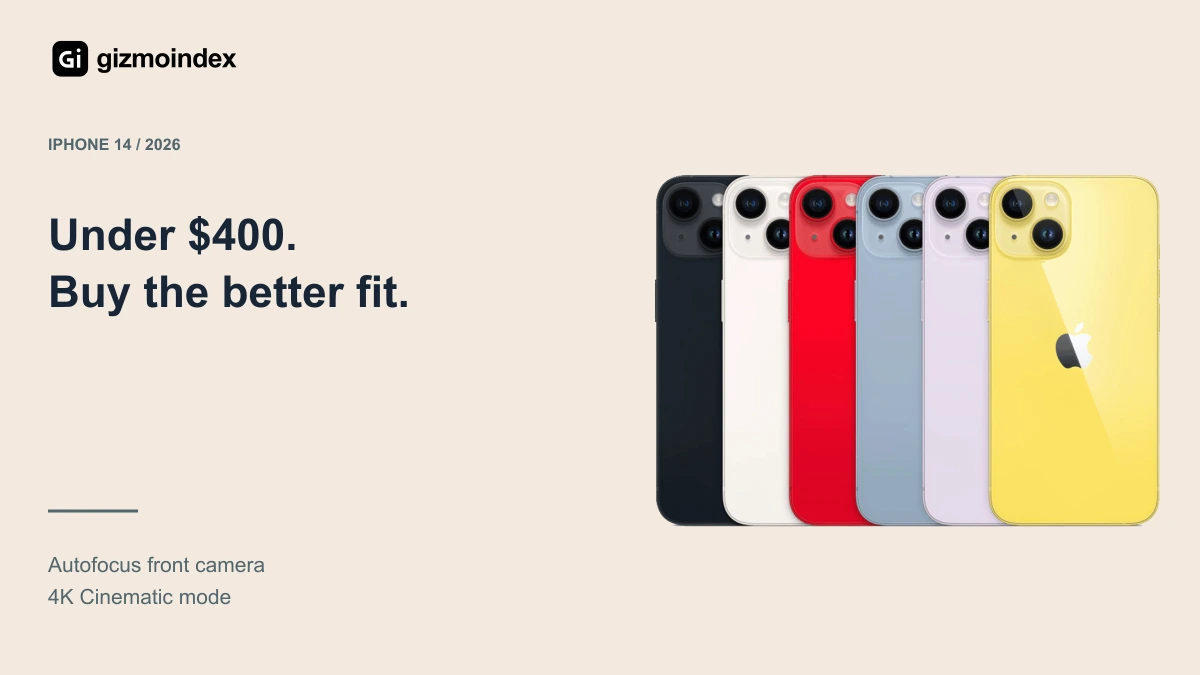
An older Pro iPhone can look like the obvious choice when you have $400 to spend. However, a regular iPhone in better condition can be the more worthwhile purchase, especially if it already has the camera features you need.
My shortlist starts with the iPhone 14, followed by the cheaper iPhone 13 and a discounted 13 Pro. The 13 Pro is a conditional option: its $438 marketplace average is above this budget, so the actual deal needs to fall below $400 before it belongs in the comparison.
My quick pick: The regular iPhone 14 is my balanced choice. Buy the 13 to spend less; consider the 13 Pro only for a verified sub-$400 total when you want its 3x telephoto, macro and ProMotion.
Quick comparison
| Model | Price reference | Useful features | Main compromise |
|---|---|---|---|
| iPhone 14 | US$340 average listing | Autofocus selfie camera; 4K Cinematic mode | No telephoto, macro, Log or ProRes |
| iPhone 13 | US$295 average listing | 128GB base; OLED; sensor-shift main camera | 60Hz; Lightning; fixed-focus selfie camera |
| iPhone 13 Pro | US$438 average listing — above budget; deal only | 3x optical telephoto; macro; ProMotion | Older battery; average above $400 |
US used listing averages, 7 October 2026, before tax and delivery. Storage, carrier and condition vary. New retail prices are labelled separately; an average is not a guaranteed offer.
iPhone 14: my most balanced place to start
The iPhone 14's $340 marketplace average makes it a realistic model to investigate below $400. I like it here for someone who wants a straightforward daily phone and spends time taking selfies, video calls or short clips.
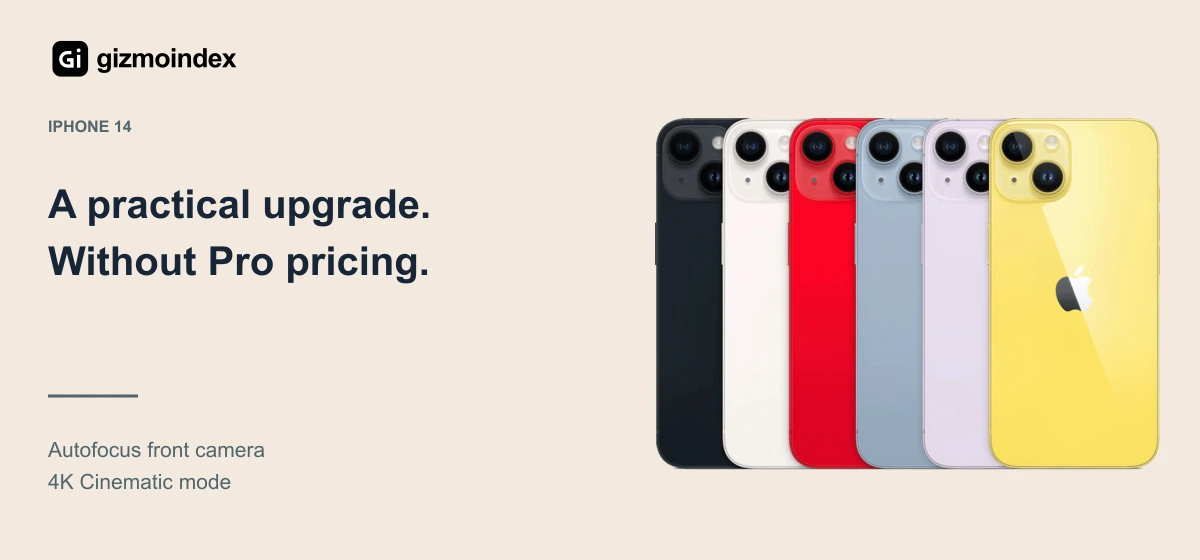
The autofocus front camera, Action mode and 4K Cinematic mode provide concrete reasons to consider it over the 13. You do not need to use every camera mode, but at least the additional money can buy something you understand and expect to use.
The display remains 60Hz and the connector is Lightning. There is no dedicated telephoto lens. If those are your priorities, this will not suddenly feel like a Pro model just because it is a generation newer than the 13.
You can use the gap below $400 to compare battery condition and storage. A clean, functional 128GB unit may be enough; if you record frequently, check the price of 256GB before deciding. Do not assume the average quoted here refers to that larger capacity.
iPhone 13: the choice if the saving is the main attraction
At a $295 marketplace average, the 13 leaves more of the budget available. For messages, maps, streaming and ordinary photos, I would not dismiss it simply because the 14 is within reach.
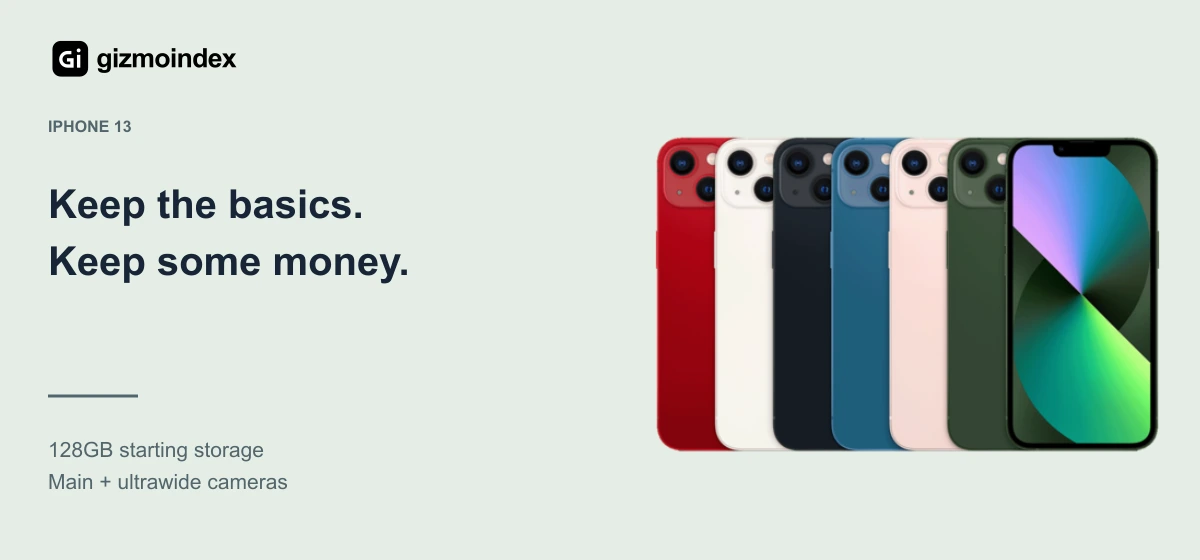
Both give you a 6.1-inch OLED display, the A15 family of chips and a dual-camera setup. The 14's camera and video changes matter most when your routine uses them. If you mainly photograph in daylight and rarely film yourself, that distinction may be less valuable to you.
Compare equally specified units before calculating a saving. A 256GB iPhone 13 and a 128GB iPhone 14 solve different storage needs. A better battery or stronger return policy can also justify choosing the older model.
If a comparable 14 costs only a little more, I would lean towards it. If the 13 leaves enough money for something you actually need, keeping the saving is a sensible decision.
iPhone 13 Pro: only when the right unit drops below $400
The 13 Pro is the more interesting conditional buy for someone who wants a smoother display and more camera options. Its ProMotion screen, 3x telephoto, macro capability and ProRAW support give it a different role from the regular 14.
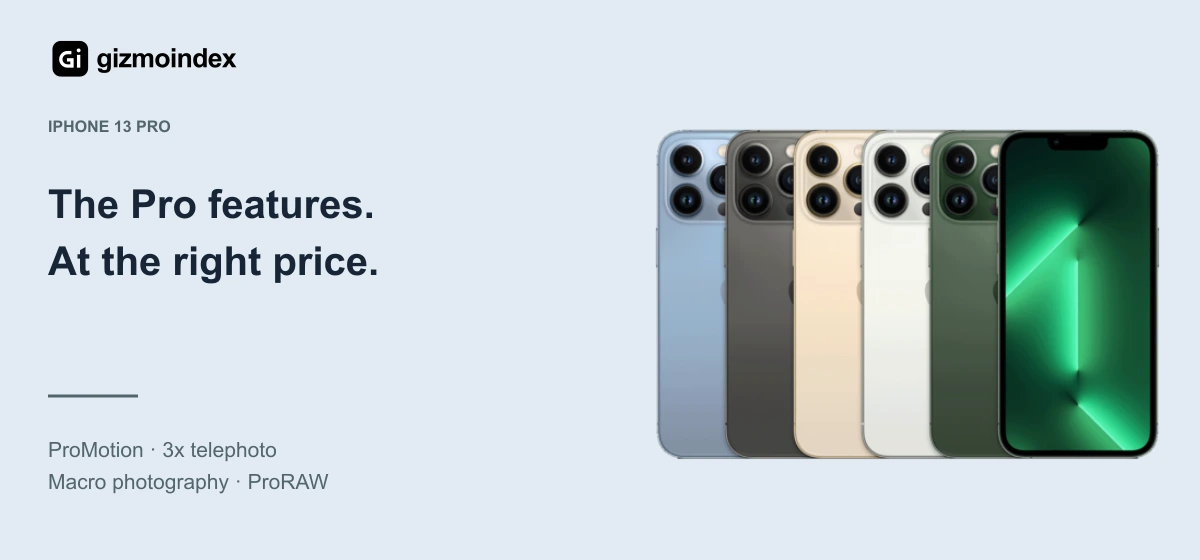
Swappa has shown entry pricing below $400, but the $438 overall average tells you this is not a blanket under-$400 recommendation. I only recommend including the individual phone in my shortlist after checking the delivered total, storage and condition.
A heavily worn Pro is not automatically better value than a sound regular iPhone. Test each lens, check focus and inspect the display. If buying online, make sure you have a practical way to return a faulty unit.
I recommend paying for the 13 Pro's features when you expect to use them. I would not chase the name and then ignore the repair cost needed to make the phone dependable.
What to check before buying
Ask for the exact model number and carrier status, particularly if buying a US-market iPhone 14 for use abroad. US iPhone 14 models use eSIM rather than a physical SIM tray, so verify support with your carrier first.
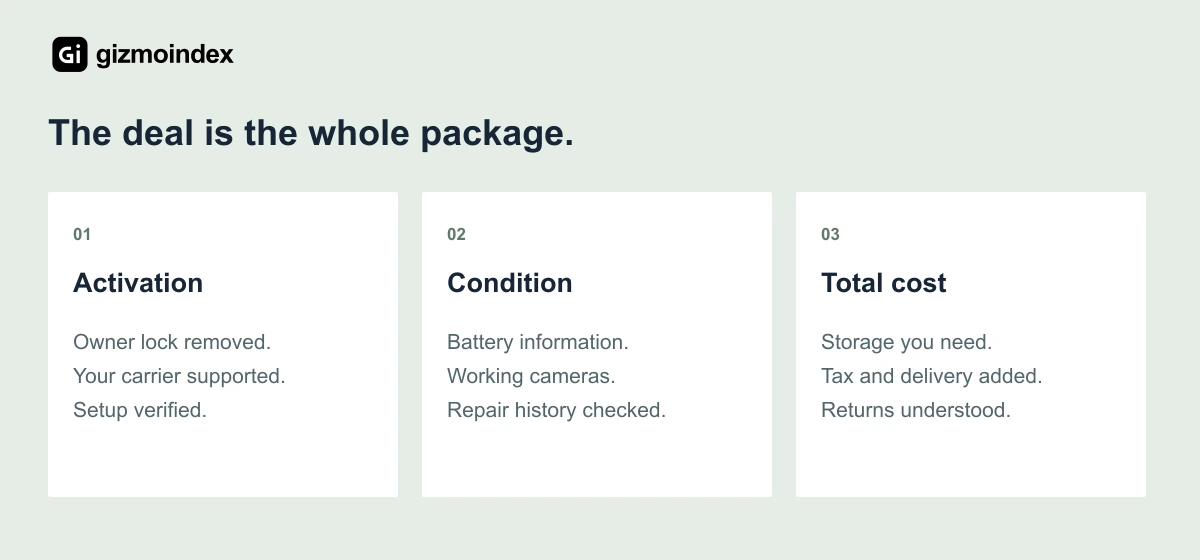
Then compare battery condition, storage and returns as part of the price. A sub-$400 listing that needs immediate paid service can move beyond the budget quickly. The most useful comparison is between phones that are actually ready for your routine.
Compare the hardware in our iPhone 14 specifications page before choosing storage and accessories.
My verdict
The iPhone 14 is my first recommendation to compare under $400, particularly if you want its front-camera and video features. The iPhone 13 offers a lower-cost alternative, while a discounted 13 Pro adds useful photography options.
For the 13 Pro, make sure the actual phone falls within the budget and passes the condition checks. A healthy phone with the features you use is a better purchase than a higher model with faults you have to pay to fix.
Frequently asked questions
Is the iPhone 13 Pro reliably below $400?
No. Its marketplace average is above $400. Treat it as a conditional used deal and verify the exact unit and final total.
Why choose iPhone 14 over iPhone 13?
Its autofocus front camera, Action mode and 4K Cinematic mode are useful reasons for people who shoot video. The value depends on the price gap and condition.
Can an imported US iPhone 14 use a physical SIM?
US iPhone 14 models are eSIM-only. Check the model number and local carrier support before purchase.
For a complete recording setup, read our iPhone content creation guide under $500.