
Before You Buy the iPhone 18 Pro Max, Consider These Five Phones
Five flagship alternatives to consider for value, software and photography before buying the iPhone 18 Pro Max.
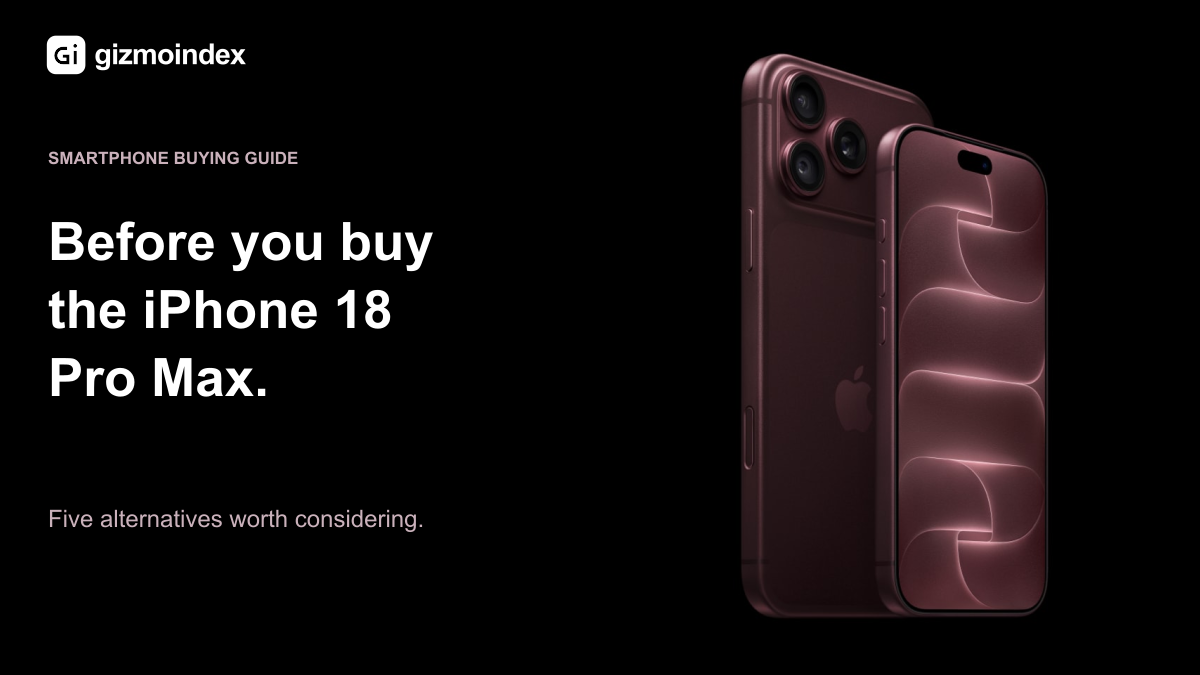
The iPhone 18 Pro Max deserves a proper comparison before you commit to its price. At $1,299 in the US, I would want to know what else I could get before making the decision. There are phones here that cost less, and others that give you a different reason to spend flagship money.
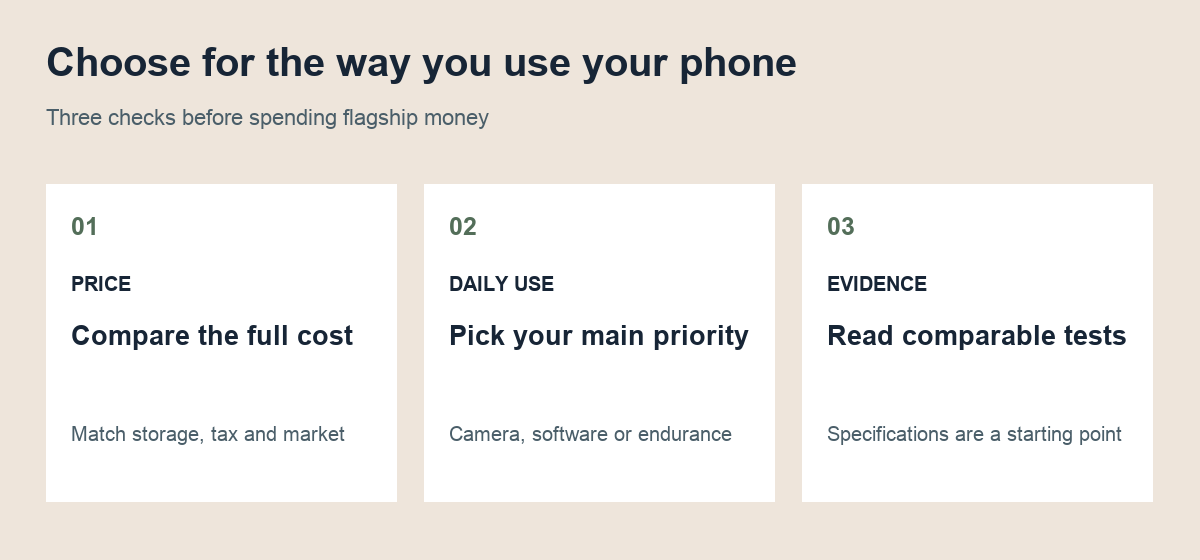
For me, the choice starts with what I need the phone to do well. A camera I enjoy using, enough battery life for my day, and software that makes sense to me matter more than buying the model everyone is talking about. The right alternative depends on which of those things matters most to you.
These five alternatives give you different reasons to compare: a lower price, a preferred software experience or camera features that fit the way you shoot. The useful question is what you gain by choosing each one.
Which alternative suits you?
| Phone | Reason to switch | Trade-off |
|---|---|---|
| OnePlus 15 | Battery capacity and a lower US starting price | Lose the iPhone workflow |
| Galaxy S26 Ultra | S Pen and Samsung productivity | Similar premium price bracket |
| Pixel 11 Pro | Smaller Pro; front and rear 4K60 | 8K uses Video Boost |
| Xiaomi 17 Ultra | 75–100mm mechanical telephoto | Large body; compare local pricing |
| OPPO Find X9 Ultra | Dedicated 10x optical reach | Premium UK price; not universally cheaper |
Switching from iPhone also means checking your paid apps, watch compatibility and file-sharing routine. A stronger specification in one area does not replace those everyday connections.
1. OnePlus 15: Keep more of your budget
The OnePlus 15 is the first phone I would look at if the iPhone 18 Pro Max’s price is making me hesitate. At $899.99 for 256GB, it leaves roughly $400 in your pocket compared with the iPhone’s $1,299 starting price. That is enough of a difference to make the comparison worth doing properly.
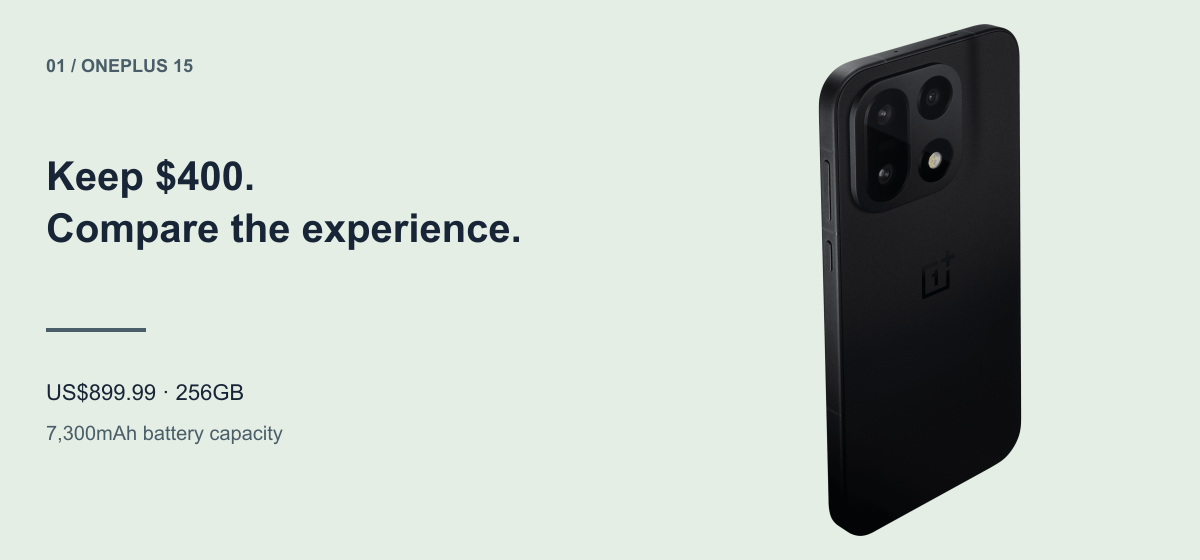
You also get a 7,300mAh battery, according to OnePlus’s product listing. I like the combination of a lower entry price and substantial battery capacity, particularly for someone who spends long days away from a charger. I would still read endurance tests before deciding how much that capacity helps in everyday use.
The important question is what you would miss by spending less. Look at camera samples, the software, and how comfortably the phone handles your usual tasks. A saving is useful when the phone still does the things you bought it for.
For me, this is the strongest value argument in the list. If the OnePlus suits your routine, there is no need to spend the remaining $400 simply because the iPhone is getting more attention.
2. Galaxy S26 Ultra: Spend the same money differently
The Galaxy S26 Ultra is where I would start if I already had an iPhone-sized budget and wanted to see what Samsung offers for the same money. Its $1,299.99 starting price puts it almost directly alongside the iPhone 18 Pro Max.
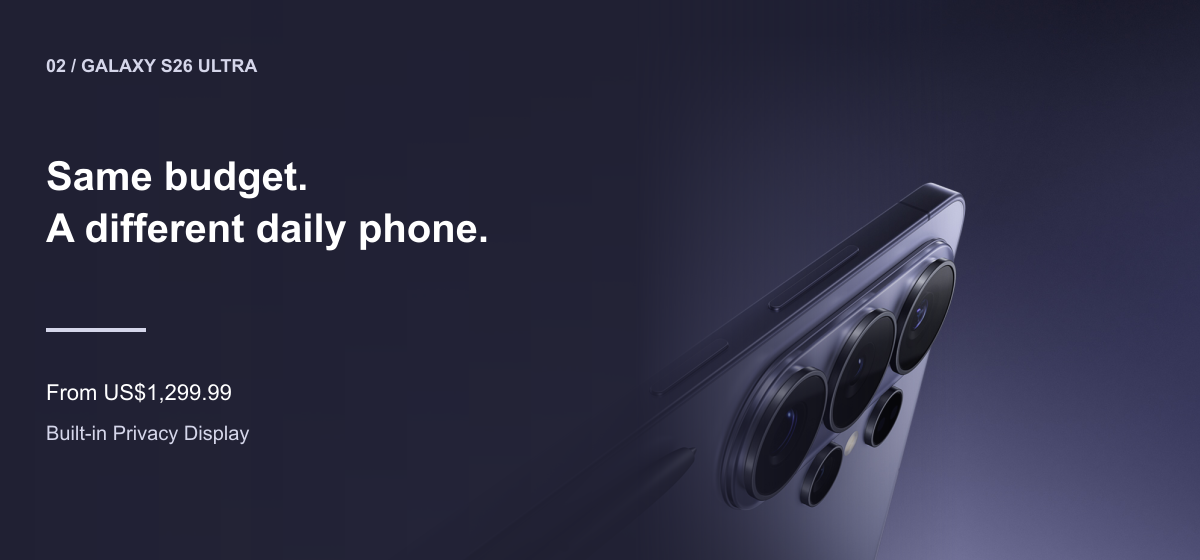
Samsung’s built-in Privacy Display is one feature I would pay attention to. If you often read messages or work on your phone around other people, limiting what someone beside you can see has an obvious everyday use.
At this price, I would spend some time with the phone before choosing. Try the interface, open the apps you rely on, and see whether its features make your normal tasks easier. A feature you use every day is worth more than a long list you forget after the first week.
I recommend the Samsung because I preferred using it and wanted what it offers. With almost no saving at the starting price, that preference needs to be clear. This is a different way to spend the premium budget, rather than a way to reduce it.
3. Pixel 11 Pro: Choose the software you will use
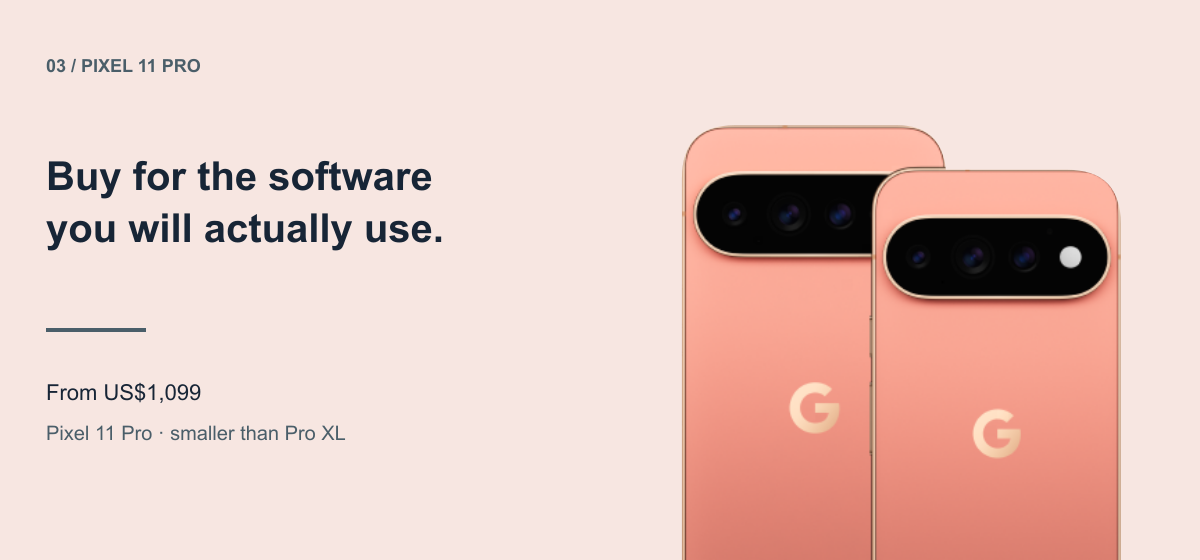
The Pixel 11 Pro gives you another way to spend less than the iPhone 18 Pro Max. Its starting list price is $1,099 before trade-in offers, leaving a $200 gap between the two entry prices. Its main appeal in this comparison is Google’s approach to the software.
Google puts Gemini at the centre of the Pixel experience. If those tools fit the way you use your phone, that is a reason to take a closer look. I would try the features I expect to use instead of choosing purely from a launch demonstration.
For example, think about the jobs you repeat on your phone throughout the week. Which of them would become easier? If you cannot identify a useful change, the AI branding alone would not persuade me to switch.
Also, the phone listed here is the Pixel 11 Pro, not the larger Pro XL. If you are choosing a Pro Max specifically for its size, handle the Pixel first. I recommend considering the smaller Pro when its size and software are part of the appeal, rather than treat it as an identical replacement.
4. Xiaomi 17 Ultra: Put the camera first
The Xiaomi 17 Ultra is one I recommend comparing if the camera is the main reason for spending flagship money. Its Leica 200MP telephoto includes 75–100mm mechanical optical zoom, giving you something specific to compare beyond the main camera.
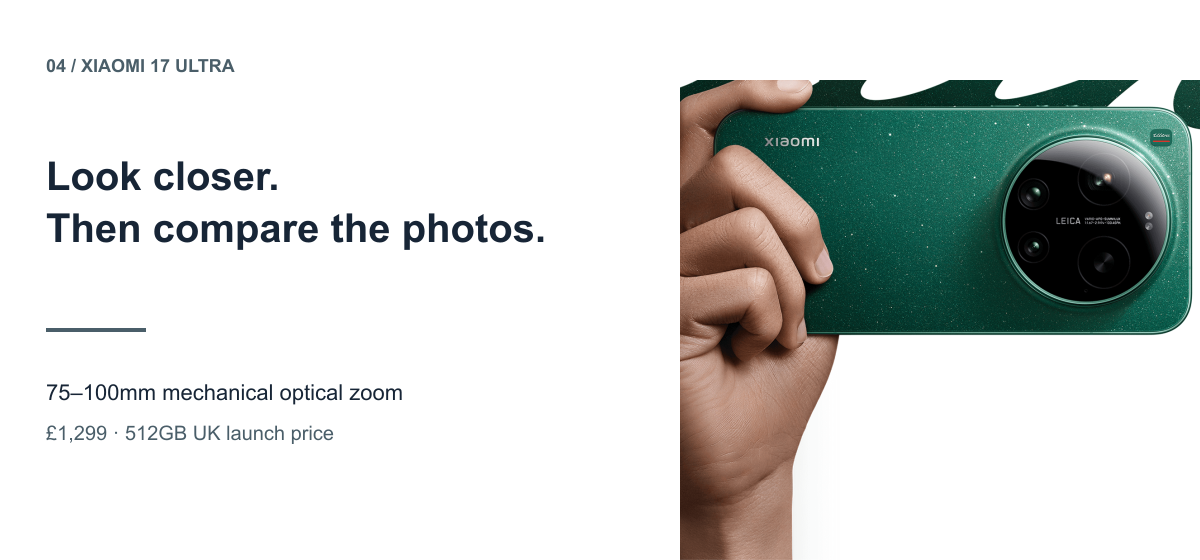
That range interests me for the different ways you can frame a subject. But camera hardware is only the beginning of the decision. I would look at portraits, moving subjects and low-light photographs, as well as what happens when you change focal lengths.
The 512GB version launched at £1,299 in the UK, as recorded in Xiaomi’s launch terms. Keep that in context: it is a UK launch price with 512GB of storage, so it should not be placed beside a US starting price and treated as a like-for-like saving.
For me, the reason to choose the Xiaomi would be enjoying the pictures and the way it lets me take them. I would want to see those results before paying for the camera specification, especially if most of my photographs are quick shots of people and everyday moments.
5. OPPO Find X9 Ultra: Decide whether you need the zoom
The OPPO Find X9 Ultra has a clear reason to be on this list: its dedicated 50MP camera with 10× optical zoom. If you often want a tighter view of something you cannot move closer to, that is a feature worth considering.
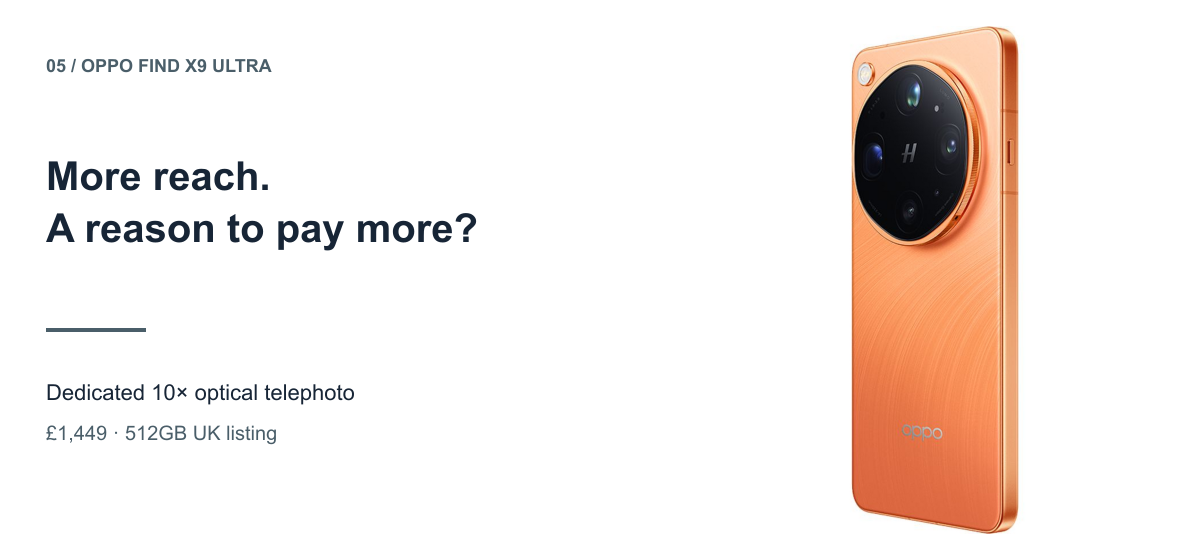
OPPO also lists dual 200MP cameras, a 7,050mAh battery and 100W wired charging. It is an ambitious set of specifications, but I would pay particular attention to actual telephoto samples, including in less favourable light.
The 512GB model is listed at £1,449 by Currys in the UK. At that price, I would ask how often I would use the extra reach. Someone who regularly photographs distant subjects has a clearer reason to consider it than someone who mostly takes nearby snapshots.
I like a feature more when I can explain what I would use it for. The OPPO makes sense as a camera-focused alternative if that zoom solves a real frustration for you. Otherwise, I would look more closely at the less expensive options before committing.
Compare the hardware in our iPhone 18 Pro Max specifications page before choosing storage and accessories.
My verdict
If I wanted to bring the cost down, I recommend starting with the OnePlus 15. The price gap gives it the clearest value argument here. Compare the Galaxy S26 Ultra when the budget was already set and I wanted Samsung’s features, or the Pixel 11 Pro when Google’s software and a smaller phone suited me better.
For photography, I would narrow it to the Xiaomi 17 Ultra and OPPO Find X9 Ultra, then compare photographs similar to the ones I actually take. Xiaomi’s optical zoom range and OPPO’s dedicated 10× camera are different reasons to investigate them.
I do not recommend buying any of these just to avoid buying an iPhone. I would buy the one that gives me a clear benefit at a price I am comfortable paying. If you can explain what you gain by choosing it, you have a much stronger reason to spend your money.
Frequently asked questions
Which option costs the least at the prices listed?
The OnePlus 15 has the lowest US starting price in this shortlist, at $899.99. That is a starting-price comparison, not a ranking of every configuration or current offer.
Are the UK and US prices directly comparable?
No. US prices exclude sales tax, while UK prices include VAT. Storage configurations and regional offers also differ. Compare prices in the same market before deciding which is cheaper.
Are all five better than the iPhone?
No single overall winner is established here. The article highlights reasons to consider each alternative, using published specifications and pricing rather than our own hands-on testing.
For a complete recording setup, read our iPhone content creation guide under $500.