
Open-Ear vs Semi-In-Ear Earbuds: Which Style Should You Buy?
Compare open-ear and semi-in-ear earbuds for fit, bass, calls, noise and battery life. Practical buying checks without blanket comfort or safety claims.
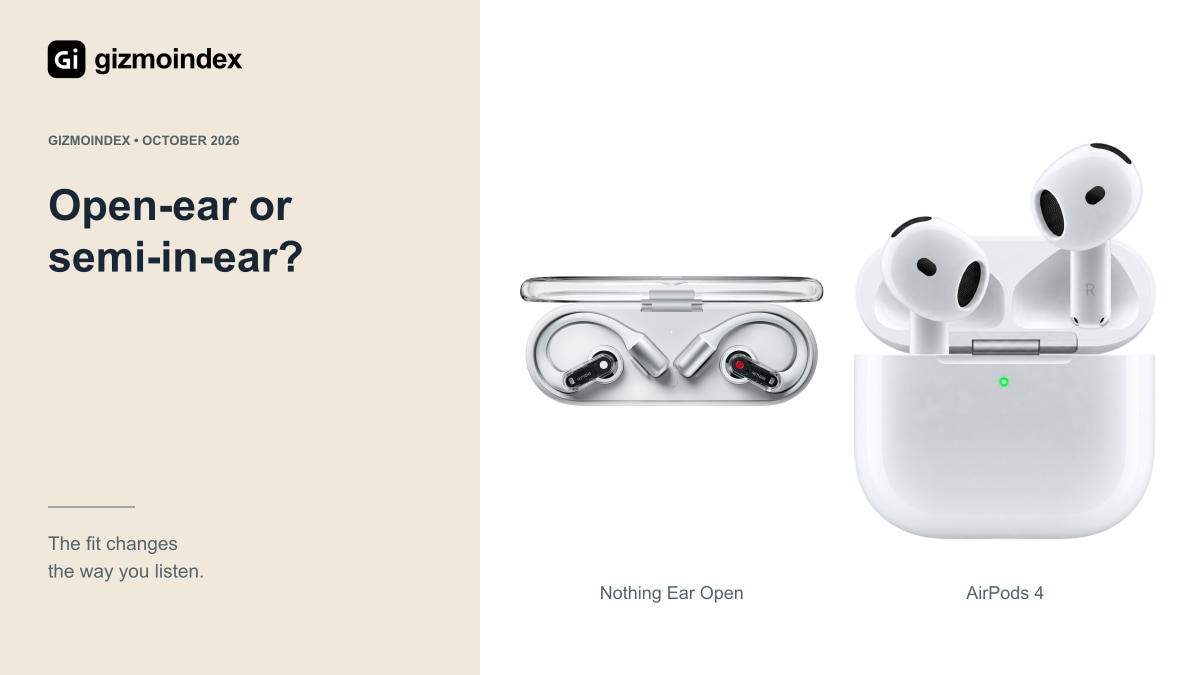
Don’t like silicone tips sealing your ears? Open-ear and semi-in-ear earbuds give you two ways around that feeling. They can look similar on a shopping page, but the fit, sound and amount of the room you hear can be quite different.
I like the idea of comfortable earbuds that don’t need constant adjustment. The catch is that an open design still has to suit your ears and surroundings. In this guide, we’ll look at comfort, sound, calls, battery and familiar examples to see which shape I’d choose for different kinds of listening.
What’s the difference?
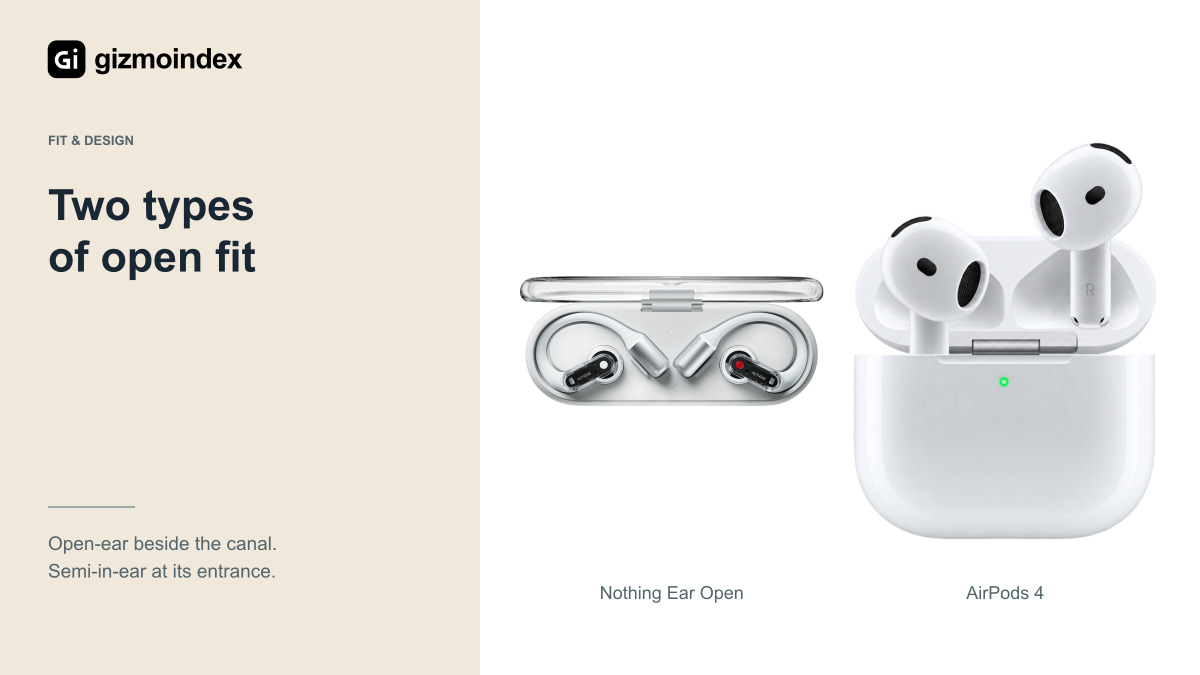
Open-ear models position a speaker outside the ear canal, usually with a hook or clip. Nothing Ear Open, Bose Ultra Open, Shokz OpenFit Air and Huawei FreeClip show how different those supports can be. Open-ear doesn’t necessarily mean bone conduction. Many use ordinary speakers directing sound toward your ear.
Semi-in-ear earbuds rest in the outer ear without a silicone seal. AirPods 4 are a familiar example. Sellers don’t always use these names consistently, so check a picture showing the actual fit. A small change in speaker position can affect bass, volume and how securely the earbud stays in place.
Comfort
What I like about the idea of open-ear earbuds is avoiding pressure from a sealed tip. The catch is that the hook or clip can create pressure elsewhere. Glasses, earrings, hair and even a hat can change how comfortable the design feels.
Semi-in-ear models can feel light and unobtrusive when the shell suits your ear. But there usually isn’t much you can adjust if it doesn’t. I’d talk, chew and move my head while trying either style. Then keep an eye on comfort during a longer session. A good return policy matters here; a few comfortable minutes doesn’t tell you how your ears will feel after a long call.
Sound quality
Fit has a big effect on the sound. A semi-in-ear model sitting closer to the canal may give you more consistent bass. An open-ear model can lose low frequencies into the surrounding air, and some use processing to compensate as the volume changes.
I’d play familiar songs and speech at a moderate level. Can you follow the vocals without turning everything up? Are bass notes clear, or do they just become louder? Also ask someone nearby about leakage in a quiet room. A large driver or an immersive-audio label isn’t enough for me to call an earbud the better-sounding choice.
Awareness and noise
An open ear canal can make the room easier to hear, but the music, wind and your attention still affect what you notice. I wouldn’t treat open-ear earbuds as a guarantee of safe running or cycling. Hearing a vehicle and judging what it’s doing are different things.
Some semi-in-ear products have active noise cancellation. AirPods 4 launched in separate standard and ANC versions, so check which one you’re comparing. Results depend on the model and fit. If a loud train is your regular listening space, I’d compare noise reduction carefully rather than assume an open design will make it comfortable.
Calls
I pay attention to call quality because good music doesn’t necessarily mean a good microphone. A pair can sound clear in a quiet room and become hard to understand beside traffic or in wind. Microphone placement, software and connection conditions all play a part.
Try a normal call where you expect to use the earbuds. Ask whether the other person understands whole words clearly, rather than only whether your voice is loud. For work, check laptop pairing and the microphone during a meeting. Easy switching between the phone and computer can matter more than an extra sound effect in the companion app.
Battery life
Always separate the earbud runtime from the total with the case. Nothing lists up to eight hours for Ear Open and up to 30 hours including the case under its test conditions. You don’t get 30 hours of uninterrupted listening without putting the earbuds back to charge.
Calls, ANC, volume and other processing can reduce those totals. Also check the case size if pocket space matters. With a used pair, battery wear deserves more attention than the original rating. Find out whether you can replace a lost earbud or worn case separately before assuming the whole set will be inexpensive to keep.
Popular options in 2026
These are the designs I’d compare to get a feel for the category. They illustrate different ways of fitting an earbud, rather than a ranking based on tests I haven’t carried out.
Nothing Ear Open
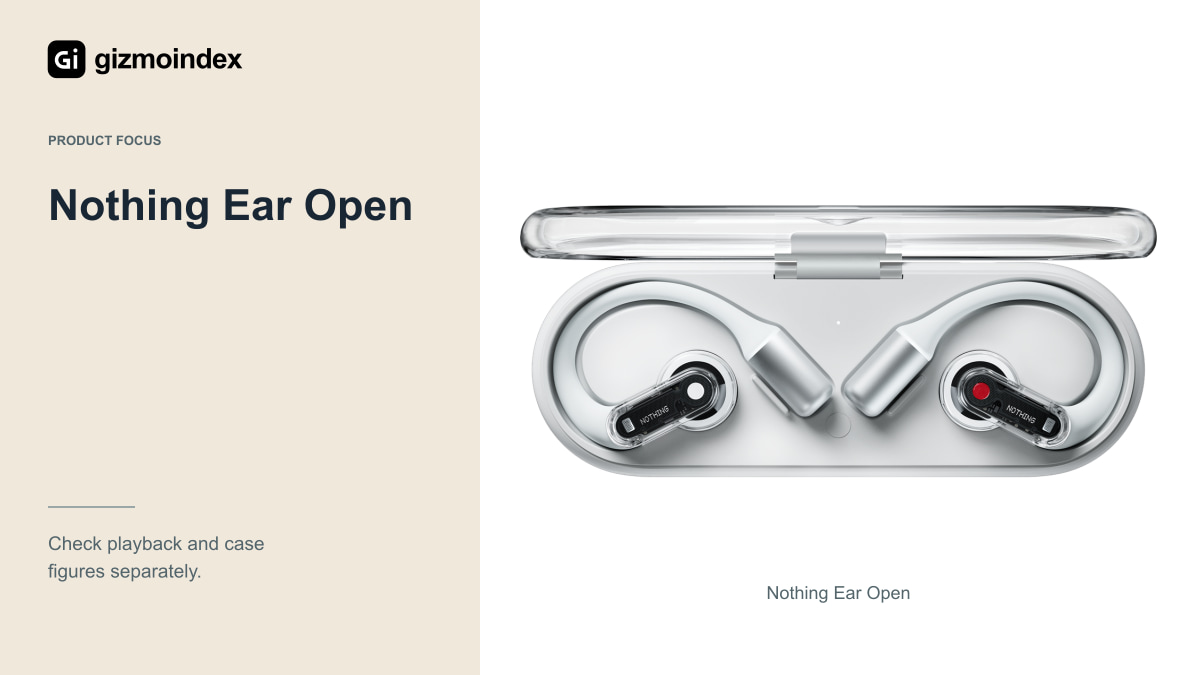
Nothing uses an ear-hook design. Check how the hook sits beside glasses and whether the case fits the pocket or bag you normally use. If avoiding a tip inside the ear is your priority, this is a useful starting point for a fit comparison.
Bose Ultra Open
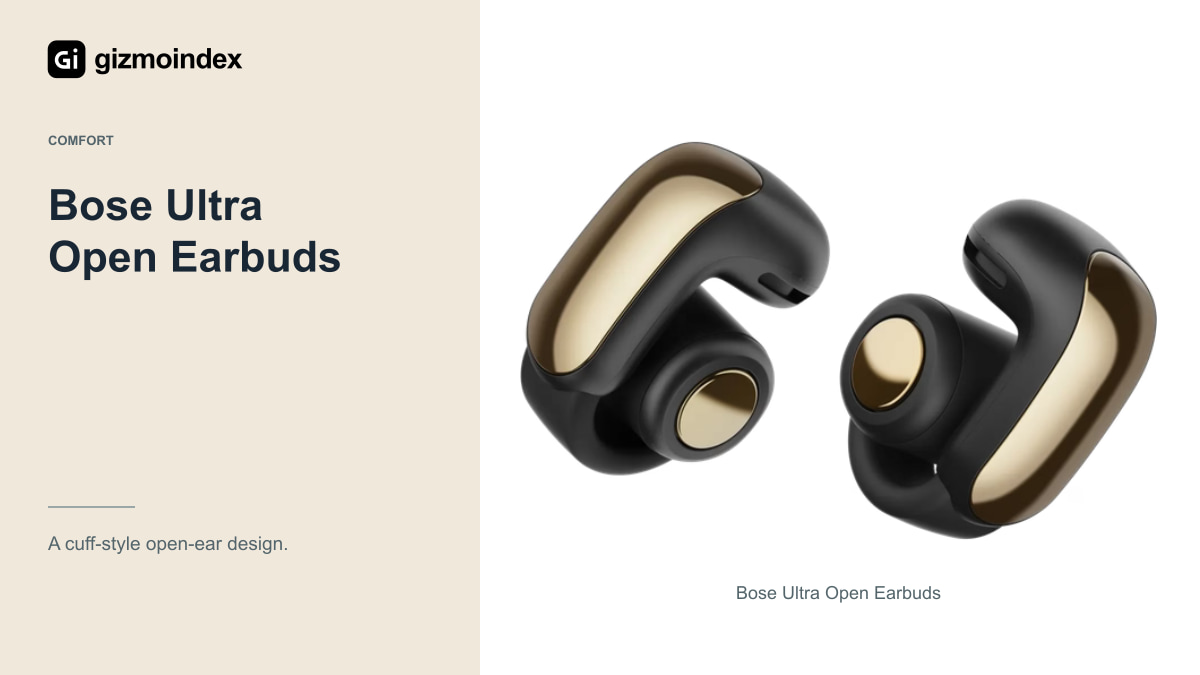
Bose takes a clip-style approach. That leaves the canal open, but the contact point still needs to feel comfortable on your own ear. Try the pressure and orientation carefully before assuming a clip suits you better than a hook.
Shokz OpenFit Air
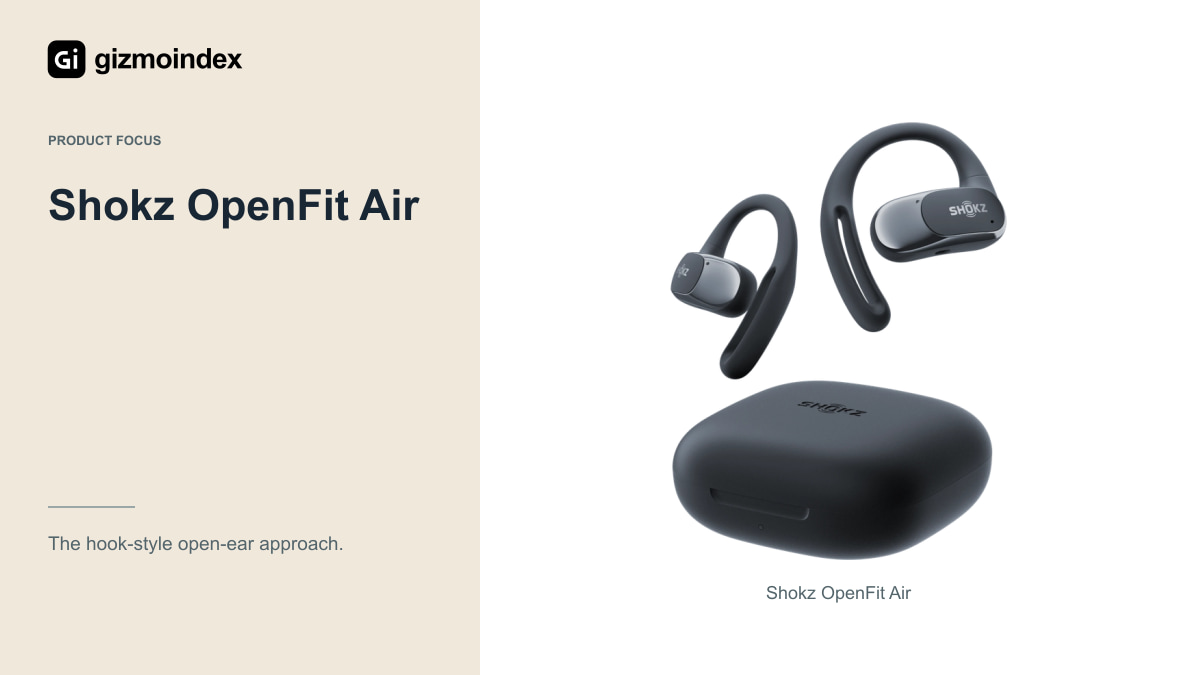
OpenFit Air is another hook-based option to compare. Check stability when you move, how easily you can use the controls and the published resistance ratings. The fit with eyewear would be one of my first checks, especially for exercise.
Huawei FreeClip
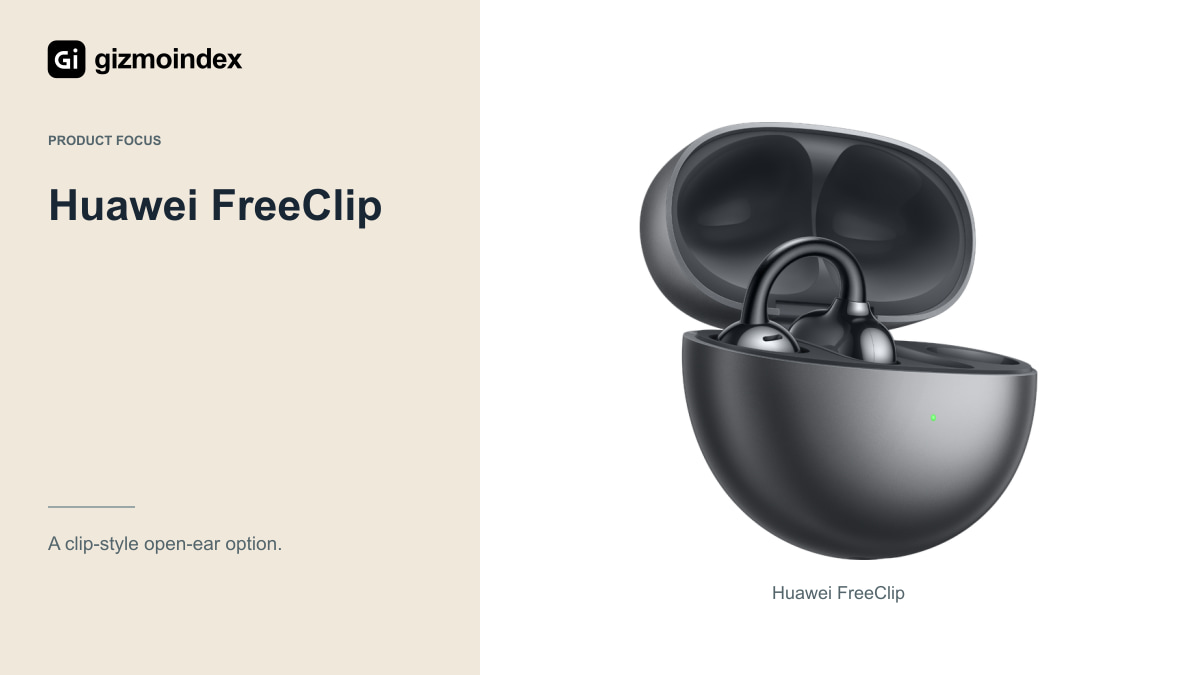
Huawei’s compact clip design gives you a different shape to try. Check comfort, retention and app support on the phone you use. A feature listed for one platform or regional software version may need a closer check on another.
AirPods 4
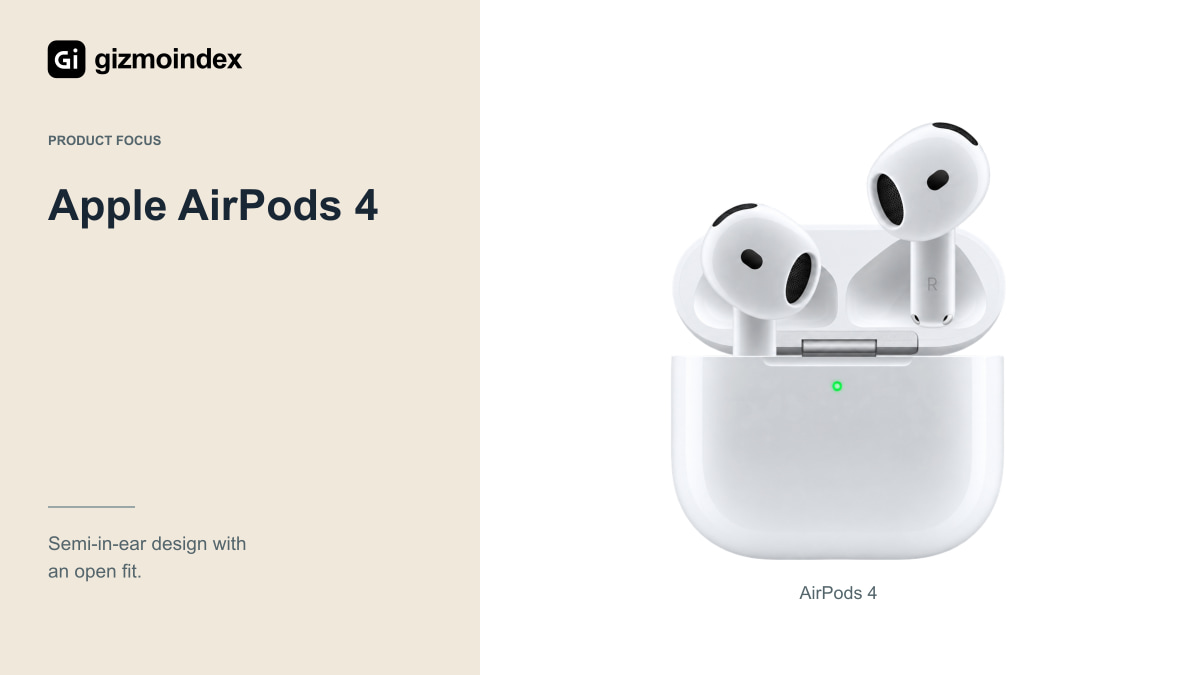
AirPods 4 provide a semi-in-ear reference, with distinct standard and ANC versions. Confirm the generation and exact model on the listing. If you like the compact shape, make sure it stays secure while talking and moving rather than judging only how it looks in the case.
Prices vary by country and generation. Compare the offer you can actually buy, together with replacement-part costs and return terms.
Key differences at a glance
Here is the comparison I’d use before narrowing down individual models.
| Question | Open-ear | Semi-in-ear |
|---|---|---|
| Canal seal | No seal; speaker outside | No silicone seal; rests at entrance |
| Fit adjustment | Depends on hook or clip design | Depends heavily on shell shape |
| Noise isolation | Usually limited | Usually limited; some offer ANC |
| Bass and leakage | Strongly affected by fit and volume | Also fit-dependent |
| Best test | Pressure, stability and leakage | Retention and comfort while moving |
Fit is still the deciding test. Two products in the same category can put pressure on completely different parts of your ear.
Which style fits your lifestyle?
For office use, I’d look at leakage, muting controls and laptop pairing. Comfort matters, but colleagues may hear an open speaker in a quiet room. Clear speech in meetings is often more useful than another audio mode.
For exercise, try the movement you actually do. A pair that stays in place while walking may feel different during a run. Check resistance for the case separately from the earbuds, and don’t assume a sweat rating means you can wash everything.
For travel, notice whether you keep raising the volume to overpower noise. If that happens regularly, a different fit with better noise reduction may suit the journey more than either open category.
Listening level matters more than the label
I wouldn’t assume an open design protects your hearing by itself. Sound level and listening time still matter, and background noise can encourage you to turn up the volume. The linked WHO guidance explains safer listening habits more usefully than a product shape can.
Use the exposure tools on your phone where available, take breaks and choose a quieter place when you can. If speech is difficult to follow at a reasonable level, reconsider the equipment for that setting. Comparing earbuds at maximum volume isn’t a good way to find the pair you can enjoy comfortably.
Buying recommendation
I’d choose open-ear if avoiding a canal seal and hearing more of the room were my priorities. The hook or clip would still have to feel comfortable. I’d choose semi-in-ear for a smaller shell that sat securely without a silicone tip.
For a noisy commute, I’d also compare a sealed pair with useful noise reduction. If I kept turning up an open design to compete with the surroundings, it probably wouldn’t be the right pair for that journey.
My advice is to try familiar music and make a call before deciding. Move your head, talk and pay attention to pressure after more than a few minutes. The best fit isn’t the one that looks smallest in a photo; it’s the pair you can enjoy wearing without repeatedly fixing it.
Sources
- Nothing Ear Open battery specifications
- Apple AirPods 4 launch and model differences
- WHO safe listening guidance