
Should You Buy the iPhone 14 Pro Max in 2026?
Is a used iPhone 14 Pro Max still worth buying in 2026? Compare its cameras, Lightning port, battery condition and price against newer alternatives.
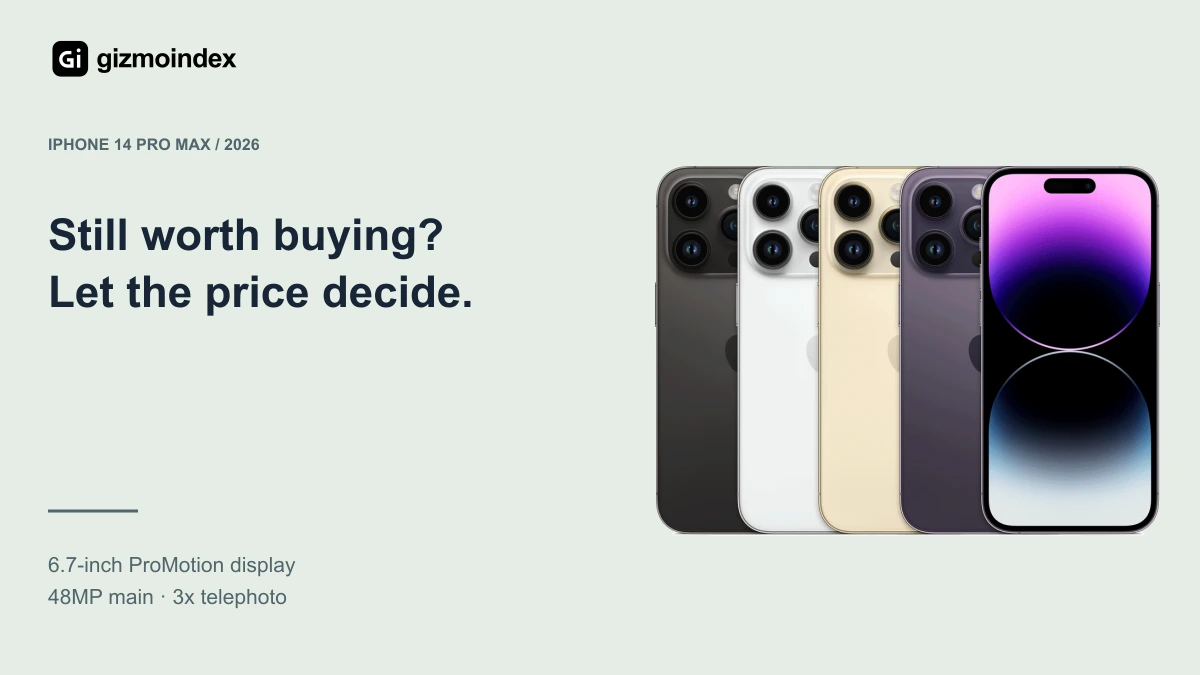
The iPhone 14 Pro Max still has features that make it appealing: a large ProMotion display, a 48MP main camera and a dedicated telephoto. What has changed is the price you should be willing to pay for them in a used phone.
Its value now depends heavily on condition and how close it sits to the iPhone 15 Pro Max. Their marketplace averages are roughly $96 apart, although those figures mix different configurations. That is a small enough gap to compare the newer model before settling on the 14.
My quick pick: Yes, if you want its large screen and the price is meaningfully below a comparable 15 Pro Max. At similar prices, I favour the 15 Pro Max for USB-C, faster transfers and 5x telephoto.
Quick comparison
| Model | Price reference | Useful features | Main compromise |
|---|---|---|---|
| iPhone 14 Pro Max | US$585 average listing | 6.7-inch ProMotion; 3x telephoto | Heavy body; Lightning; no Apple Intelligence |
| iPhone 15 Pro Max | US$681 average listing | 5x telephoto; USB 3; external ProRes 4K60 | Older battery; no 4K120 capture |
US used listing averages, 7 October 2026, before tax and delivery. Storage, carrier and condition vary. New retail prices are labelled separately; an average is not a guaranteed offer.
What still makes the iPhone 14 Pro Max appealing
The 6.7-inch ProMotion display is one of the main reasons I would consider this phone. If you read a lot, watch videos or prefer more room for camera framing, the large screen can be a real everyday benefit.
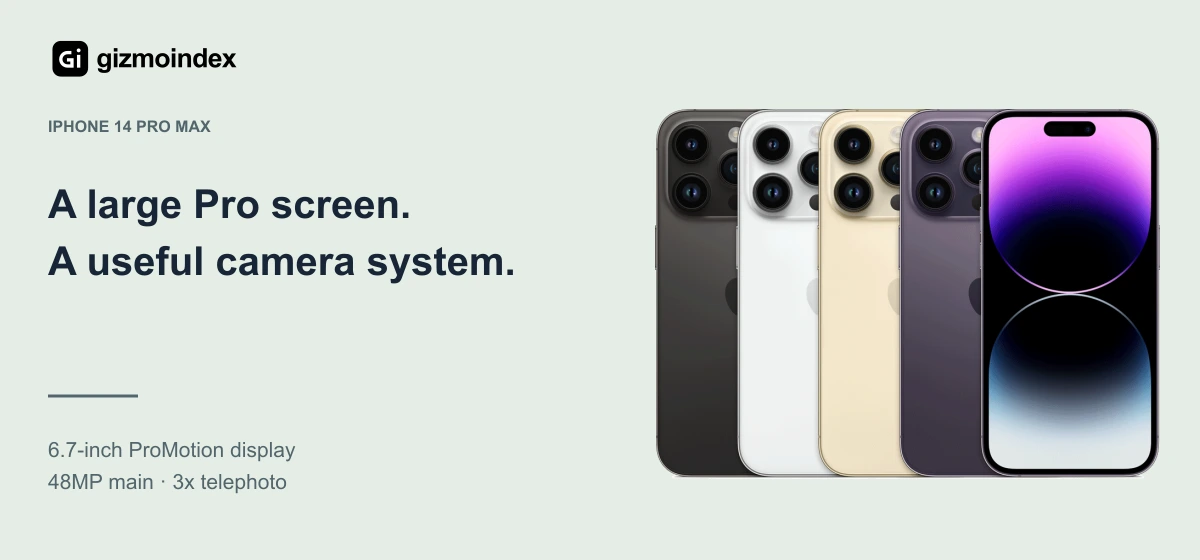
The camera setup also has a clear purpose: a 48MP main camera, ultrawide and dedicated 3x telephoto, with macro capability and ProRAW. I would value that variety more than the original launch price or the impression that an old flagship must beat every newer regular phone.
For video, Apple lists 4K recording and ProRes, with the important 128GB ProRes restriction to 1080p at 30fps. If you are buying for a particular recording format, check both the model and storage configuration before choosing a listing.
Those capabilities are reasons to consider it, not proof that every used example remains a good camera phone. A damaged lens, weak battery or faulty screen can remove much of the appeal.
Limitations to consider
Lightning is the most obvious practical compromise. If your laptop, tablet and accessories use USB-C, this phone keeps another cable in your routine. For people who move large video files, the connector and transfer workflow deserve more attention than they would for occasional charging.
The 14 Pro Max is not compatible with Apple Intelligence. It remains on Apple's iOS 27 compatibility list, but operating-system support and AI-feature support are different questions. I recommend it for its existing capabilities instead of expecting the full feature set of newer models.
It is also a large, heavy phone. If you already find bigger handsets uncomfortable, a discounted Pro Max will not fix that. Try the size before paying, especially if I planned to carry it all day or hold it for long recordings.
Why I would compare the iPhone 15 Pro Max
The 15 Pro Max adds USB-C with USB 3 support, a 5x telephoto and Log recording. Those are concrete reasons to compare it when the price difference is manageable. The 14 Pro Max's 3x view may still suit some subjects, so longer reach is not a universal victory.
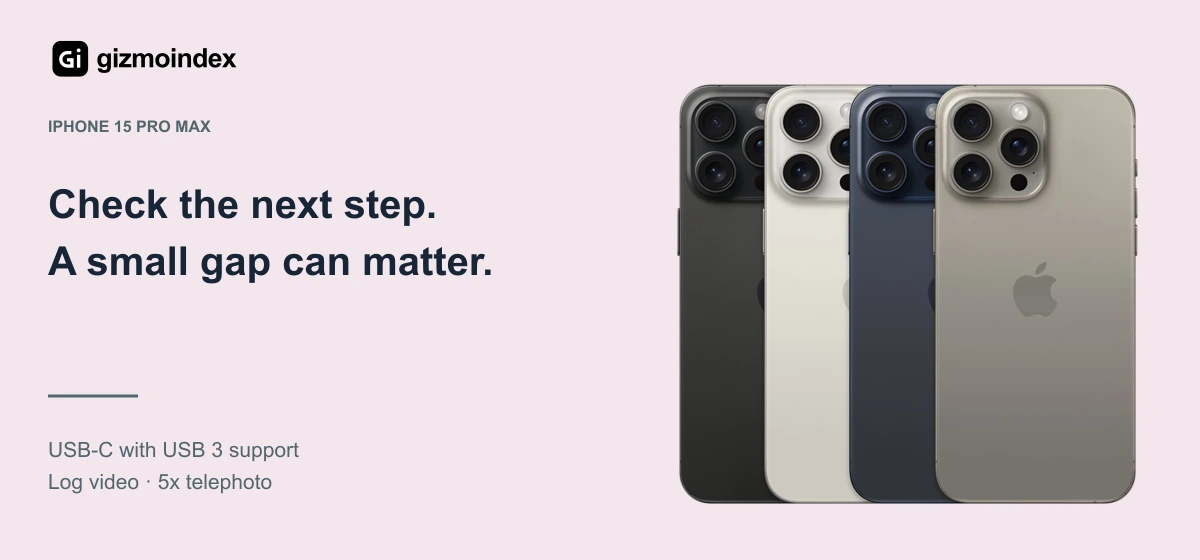
Match storage and condition before judging the gap. The 15 Pro Max starts at 256GB, while a cheap 14 Pro Max can be 128GB. Comparing only the headline prices can hide a meaningful difference in what you are buying.
If a healthy 15 Pro Max costs only a little more than a similar 14 Pro Max, I would generally favour the newer model. If the 14 is substantially cheaper and the limitations do not affect my routine, its value becomes clearer.
My checklist for the actual used phone
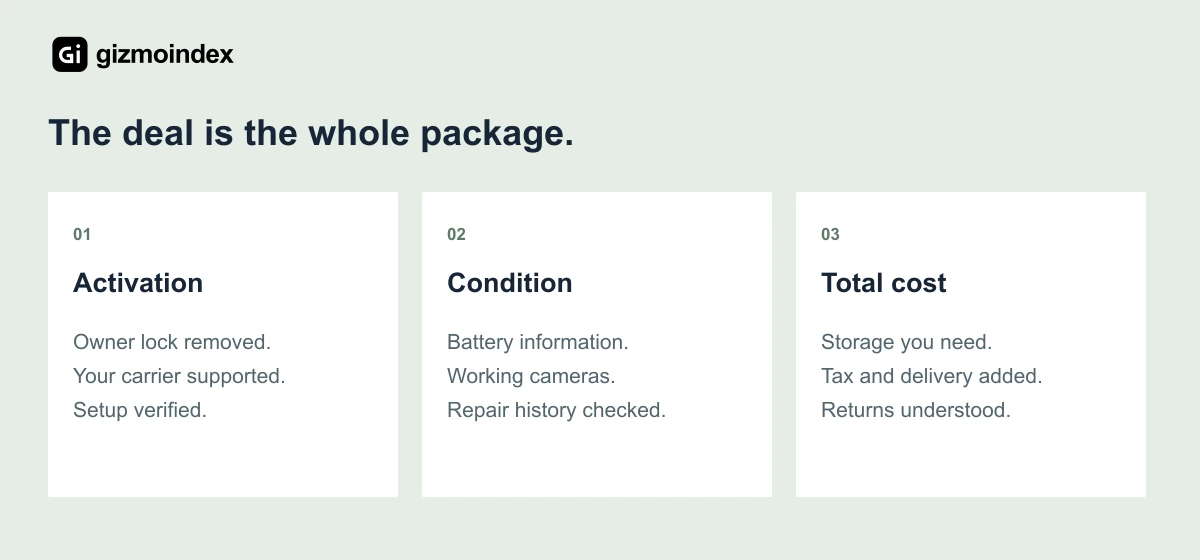
I would verify Activation Lock is removed, confirm network compatibility and check the exact regional model. US iPhone 14 models are eSIM-only, which needs to fit the carrier you intend to use.
Then Test Face ID, every camera, the microphone, speakers, screen and charging port. I would review battery information and any available parts history, then read the return terms. None of these checks should be replaced by a seller saying the phone is “neat.”
A repaired device is not automatically a bad device, but the work and its consequences need to be clear. If the price is attractive only because an important fault is being ignored, I would keep looking.
Compare the hardware in our iPhone 14 specifications page before choosing storage and accessories.
My verdict
The iPhone 14 Pro Max is still worth considering in 2026 for its large display and versatile cameras. My recommendation is a conditional yes: buy it when the used price reflects its age and the phone is in good condition.
If a comparable 15 Pro Max costs only a little more, compare that option carefully. Avoid paying a Pro Max premium for a weak battery, insufficient storage or faults that need immediate attention.
Frequently asked questions
Does the iPhone 14 Pro Max support Apple Intelligence?
No. Its current iOS compatibility does not make it Apple Intelligence-compatible.
Is the 14 Pro Max better than the regular iPhone 15?
It offers ProMotion and a dedicated telephoto, while the regular 15 offers USB-C in a smaller package. The better purchase depends on your priorities and the condition of each unit.
What battery percentage should I insist on?
Do not rely on one number alone. Consider service messages, real behaviour, repair history and the cost of any needed service. Ask the seller to document battery condition and returns.
For a complete recording setup, read our iPhone content creation guide under $500.